

🌿 Ruzu Non-Alcoholic Herbal Bitters
Ruzu Non-Alcoholic Herbal Bitters is a natural health supplement specially formulated to:
- ✅ Promote general wellness
- ✅ Detoxify the body
- ✅ Support the treatment of various ailments
Made from a powerful blend of 100% organic and medicinal herbs, Ruzu is completely alcohol-free, making it ideal for:
- 👪 All age groups
- 🌱 Health-conscious individuals
- 🌿 Anyone seeking non-alcoholic herbal remedies
Whether you're looking to boost your vitality, cleanse your system, or support healing the natural way, Ruzu Bitters offers a trusted herbal solution.
Europe’s record-breaking summer heatwaves are already exacting a huge economic toll, highlighting the rising impact of climate change on the continent.
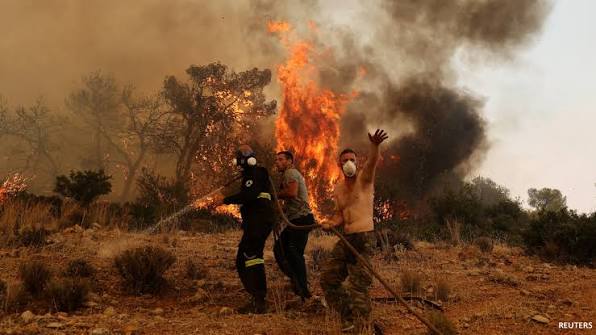
Global warming has exacerbated heat and drought, affecting power generation, river transport, agriculture and public health, scientists say. Europe is on track for its worst wildfire season on record.
The total losses are already in the hundreds of billions of euros, according to estimates by economists, and the economic impact is expected to grow over the coming years.
“We have multiple extreme weather events happening all at the same time and 2026 is particularly concerning,” warned Sehrish Usman, an economist at the University of Mannheim.
“What is particularly worrisome about 2026 from an economic perspective is that there are multiple episodes of extreme events,” he said.
“Take heatwaves, droughts, wildfires… these are happening simultaneously and mostly in the same places, increasing their impact.”
Record heat in June and July has disrupted shipping on the Rhine and Danube, forced several nuclear reactors to reduce or stop production because of cooling problems and damaged agricultural output. Heat has also cut worker productivity and led to tens of thousands of deaths, including more than 10,000 reported in Germany.
Read Also: Ghana Unlocks New Economic Opportunities From Cashew Apples
Allianz estimates that a two-week-long heatwave in June alone could cut Europe’s GDP by 0.3 percentage points, while ING estimates that the disruption to the Rhine could cut Germany’s GDP by 0.3 percentage points this year.
Allianz also warned that climate change could cut growth by 5-7% by 2030 in highly exposed economies such as Spain, France and Italy.
“This year the overall bill will be much bigger.
Allianz economist Hazem said the figure did not take into account fires, droughts, various floods or the expected El Nino.
The economic consequences may get worse even after the extreme weather itself has passed, Usman said.
You would expect the damage to be greatest in the year that an extreme event occurs and then to fade but we find the opposite,” he said.
“The economic impact builds in the years afterward because the extreme weather set off a chain of slow-moving economic repercussions.
Southern Europe is particularly vulnerable, with reductions in summer tourism, rises in food prices and crop failures.
Extreme heat could change traditional holiday patterns, said Carsten Brzeski, ING economist.
“Can you imagine tourists walking thru southern Italy or Spain in 45 degrees? I can not. “So I think the nature of tourism will change,” Brzeski said.
The government’s finances are also being strained by extreme weather, as tax revenues fall and spending rises on emergency responses and climate adaptation. Allianz estimates lost economic output could lower annual tax revenue by as much as 1.8% in France and 1.3% in Italy and Spain.
The fiscal burden going up could eventually add to pressure on the European Central Bank, especially as governments struggle to finance defense, energy transition and climate resilience.