
🌿 Ruzu Non-Alcoholic Herbal Bitters
Ruzu Non-Alcoholic Herbal Bitters is a natural health supplement specially formulated to:
- ✅ Promote general wellness
- ✅ Detoxify the body
- ✅ Support the treatment of various ailments
Made from a powerful blend of 100% organic and medicinal herbs, Ruzu is completely alcohol-free, making it ideal for:
- 👪 All age groups
- 🌱 Health-conscious individuals
- 🌿 Anyone seeking non-alcoholic herbal remedies
Whether you're looking to boost your vitality, cleanse your system, or support healing the natural way, Ruzu Bitters offers a trusted herbal solution.
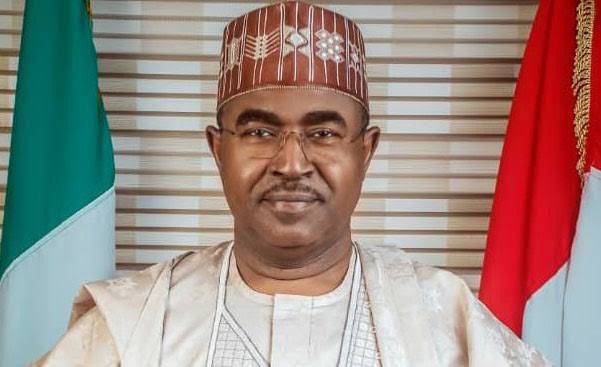
The Chairman of the National Drug Law Enforcement Agency (NDLEA), Brig. Gen. Buba Marwa (retd.) has called for a more effective financial offensive against drug cartels, saying the agency must go after the wealth and financial networks that sustain the illicit narcotics business.
“We should no longer evaluate the fight against drug trafficking primarily on the number of suspects arrested or quantities of drugs intercepted,” Marwa said, adding that criminal networks could recover quickly from such losses if their financiers and assets were not touched.
He made the remarks in Abuja on Wednesday at the opening of a specialized training program for investigators and prosecutors on financial investigation, asset tracing and recovery.
The program is also focused on the forfeiture and management of assets related to drug trafficking and other organized crimes.
The NDLEA chairman said “Drug trafficking must be treated as a business, which is all about the money, and the networks are beyond those arrested physically for transporting or selling narcotics.
Financiers, money launderers, facilitators and other professionals who help criminals disguise or transfer illicit funds are critical to the survival of drug organizations, he said.
So he instructed investigators to follow financial trails as well as traditional drug investigations.
“If we arrest the courier but leave the financier untouched, if we seize the drugs but leave the proceeds with the criminal enterprise, if we secure a conviction but fail to recover the illicit wealth, we have only tackled part of the problem,” Marwa said.
He said that removing traffickers’ financial muscle would make it harder for criminal organizations to substitute seized drugs, recruit new members and fund further operations.
“The drug networks were becoming more difficult to follow,” said Marwa, as criminals increasingly used technology and sophisticated financial arrangements to conceal their proceeds.
He said investigators now had to contend with cryptocurrency transactions, complex corporate structures and legitimate businesses that were alleged to be used to mask the source and ownership of criminal assets.
He said the development required a corresponding improvement in the technical skills of law enforcement officers.
Marwa said NDLEA personnel must be able to disentangle complex transactions, identify the real owners of assets, gather digital evidence and trace proceeds of crime beyond Nigeria’s borders.
“The sophistication of organized crime demands a sophistication in our response,” he said.
“We need to shift from detecting crime to disrupting crime; from arresting offenders to dismantling criminal enterprises; and from confiscating drugs to depriving traffickers of the wealth that motivates and sustains their activities.”
Read Also: Nigerian Troops Receive Two ISWAP Terrorists in Borno
NDLEA has made progress in intercepting narcotics and prosecuting suspects, but the next phase of the agency’s operations must focus on making the illicit drug business financially unattractive, Marwa said.
He said traffickers should not be allowed to keep properties, bank balances and other benefits they gained from their criminal activities after their drugs had been confiscated.
The chairman of the NDLEA stated that successful enforcement should cut off the resources of criminal networks to reestablish their operations.
The agency’s goal was to make narcotics trafficking a business in which the risks far outweighed the potential profits, he said.
Marwa also highlighted the connections between drug trafficking and other criminal activities, noting that drug networks often function as part of a broader ecosystem of organized crime.
He said that corruption, money laundering, cybercrime, human trafficking and illegal arms dealing are some of the crimes that can overlap with the narcotics trade.
“The drug trafficking ecosystem is interlinked with money laundering, corruption, cybercrime, human trafficking, illicit arms trafficking and other forms of organized crime,” he said.
“These links required cooperation between different law enforcement institutions,” said Marwa.
He also called for closer coordination within the NDLEA especially between officers in charge of intelligence, investigations, prosecutions, forensic analysis and financial and asset investigations.
intelligence gathered by one department should feed into the work of others and not be isolated he said.
The program was attended by officials of the Economic and Financial Crimes Commission (EFCC), Independent Corrupt Practices and Other Related Offenses Commission (ICPC) and the Nigeria Financial Intelligence Unit (NFIU).
The involvement of the institutions was important, Marwa said, as cooperation between investigators, prosecutors and the judiciary is often required for successful asset recovery.
Among others engaged for the training were the recently retired Circuit Judge Michael Hopmeier of the Southwark Crown Court, United Kingdom; former ICPC Chairman, Prof. Bolaji Owasanoye (SAN); and the Director of Public Prosecutions of the Federation, Rotimi Oyedepo (SAN).
Other participants were experts in cryptocurrency, money laundering and international asset recovery.
In addition to identifying and confiscating criminal assets, Marwa told officers of the dangers of mismanaging recovered property.
He said that if an asset wasn’t properly managed, it could lose a lot of value between being seized and being disposed of.
He said mishandling of recovered assets could also cast doubt on the integrity of the forfeiture process.
He therefore demanded transparency at each stage, including seizure, forfeiture, custody, management and eventual realization of recovered assets.
Marwa urged officers attending the training to share the expertise they had gained with their colleagues and ensure the lessons were visible in future investigations.
The agency expected participants to be better able to trace suspicious transactions, locate hidden assets, develop stronger evidence and obtain forfeiture orders against drug traffickers, he said.
The Chief Judge of the Federal High Court, Justice John Tsoho, also supported close collaboration between the judiciary and agencies fighting narcotics and financial crimes.
Justice Inyang Ekwo gave a goodwill message on behalf of Tsoho who said that the changing nature of drug related offenses called for more sophisticated law enforcement techniques.
The scope of narcotics crime had grown beyond traditional drug trafficking to areas such as financial crime and cryptocurrency-enabled money laundering, he said.
The message said the training subject demonstrated “the extensive and complex nature of drug crimes and can be, and their ever-expanding frontiers that need to be addressed by effective and sophisticated law enforcement.
Tsoho also commended the NDLEA leadership for its efforts in the fight against drug trafficking, saying that stronger cooperation between the Federal High Court and law enforcement institutions could enhance the image of Nigeria in the international fight against organized crime.












[…] Read Also: NDLEA Must Dismantle Drug Cartels’ Financial Networks – Marwa […]