
🌿 Ruzu Non-Alcoholic Herbal Bitters
Ruzu Non-Alcoholic Herbal Bitters is a natural health supplement specially formulated to:
- ✅ Promote general wellness
- ✅ Detoxify the body
- ✅ Support the treatment of various ailments
Made from a powerful blend of 100% organic and medicinal herbs, Ruzu is completely alcohol-free, making it ideal for:
- 👪 All age groups
- 🌱 Health-conscious individuals
- 🌿 Anyone seeking non-alcoholic herbal remedies
Whether you're looking to boost your vitality, cleanse your system, or support healing the natural way, Ruzu Bitters offers a trusted herbal solution.
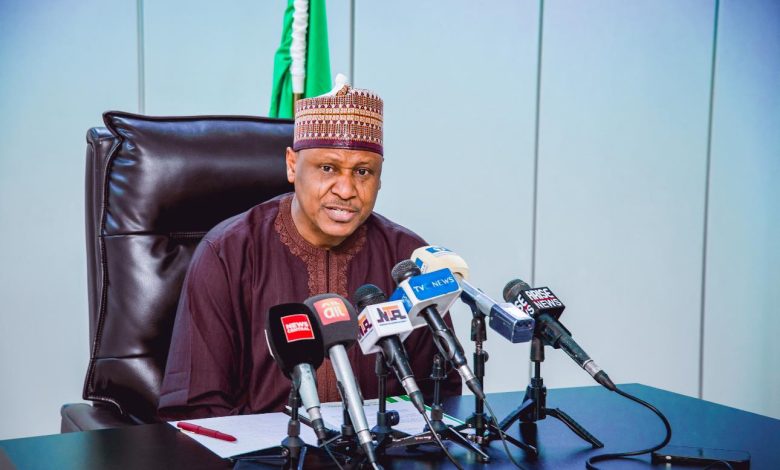
The Minister of Information and National Orientation, Mohammed Idris, has challenged universities, polytechnics and colleges of education in the North Central region of the country to align their research, training and innovations to produce solutions that can create jobs and drive sustainable development.
The Information Minister made the call at the 2026 Tertiary Education Trust Fund (TETFund) North Central Zonal Town Hall Meeting, in Lokoja, Kogi state, which was held to deliberate on the future of tertiary education and the effective deployment of TETFund interventions across the North Central region.
According to Idris, tertiary institutions must move beyond producing graduates and become centres of research and innovation capable of addressing challenges in agriculture, healthcare, mining, energy, manufacturing, technology and other critical sectors.
“Our institutions must therefore become more closely connected to the economic realities of their communities,” Idris said.
The minister stressed that the North Central possessed enormous economic potential, including vast agricultural land, mineral resources, strategic waterways and a large pool of human capital, which could be better harnessed through education, research and innovation.
READ ALSO: Information Minister Reassures South – East of Tinubu’s Inclusive Governance
He noted that the region’s agricultural economy required research into improved seeds, irrigation, mechanisation, food processing and storage, while its mineral resources required scientific research, responsible extraction and local value addition.
“Tertiary institutions must produce the scientists, engineers, agricultural experts, technicians, entrepreneurs and other professionals required to unlock these opportunities. Tertiary education is not simply about producing graduates. It is about producing the teachers, doctors, engineers, scientists, entrepreneurs, researchers, administrators and skilled professionals who will build the Nigeria we want,” he said.
Idris also called for stronger partnerships between tertiary institutions and the private sector, saying industry should play a greater role in curriculum development, research, technical training and innovation.
“Industry should not be an occasional visitor to our campuses. It should be a partner in curriculum development, research, technical training and innovation,” he said.
Changing World
He further urged institutions to prepare students for the changing world of work, particularly as artificial intelligence, automation and digital technologies continue to reshape the global economy.
“Education policy must therefore respond to the world as it is becoming, not simply the world as it was. The North Central Town Hall should not end with recommendations that remain on paper. It should produce practical priorities, clear responsibilities and measurable outcomes,” he said.
Idris linked investment in education to national security and social stability, arguing that young Nigerians equipped with quality education, useful skills and economic opportunities would be less vulnerable to criminality, extremism and hopelessness.
The minister disclosed that TETFund had approved approximately N2.53 billion for each public university, N1.87 billion for each polytechnic and N2.06 billion for each college of education under its 2026 intervention.
“These allocations should translate into better-equipped laboratories, modernised libraries, improved lecture facilities and stronger support for research. These are not simply budgetary figures. They represent laboratories that can be equipped, lecture halls that can be built, libraries that can be modernised, research that can be supported and students who can learn in better environments,” he said.
Idris, however, warned that infrastructure alone could not address the challenges confronting Nigeria’s tertiary education sector, urging institutions to examine whether their graduates possessed the skills demanded by employers, whether researchers were adequately connected to industry and whether innovations developed in universities were being commercialised.
“The challenge before Nigerian tertiary education today is no longer simply about constructing buildings. We must ask what happens inside those buildings. There is a need for greater transparency, monitoring and accountability in the deployment of TET intervention funds. Nigerians should be able to see the value created by every naira invested in tertiary education.”
Greater Investment
Representing the Secretary to the Government of the Federation, Senator George Akume, his Senior Technical Adviser, Professor Bolaji Bernard Babatunde, similarly called for greater investment in research capable of addressing Nigeria’s pressing challenges.
“Our universities must therefore increasingly become centres where Nigeria’s problems are converted to national solutions,” Babatunde said.
For his part, Kogi State Governor, Usman Ododo, while describing education as the foundation of national priority, stressed that the North Central region had the resources to become a major economic hub if its tertiary institutions were properly connected to government and industry.
“Every prosperous nation is first built in the classroom, before it is built in the marketplace. Ideas shape institutions, institutions create opportunities, and opportunities transform societies,” Ododo said.
The governor urged TETFund to devote more resources to research in agriculture, mining, healthcare, manufacturing, artificial intelligence, renewable energy and security.
“Our tertiary institutions should become solution centres that support governments and industries with ideas capable of transforming our comparative advantage into food security, industrial growth, employment, and sustainable prosperity,” he added.
The governor also assured stakeholders that the Kogi State Government would continue to complement federal interventions by creating an enabling environment for teaching, research, innovation and skills development.
Participants were urged to use the meeting to exchange ideas freely, identify challenges and develop practical solutions that would strengthen institutional governance and improve the quality of higher education.