
🌿 Ruzu Non-Alcoholic Herbal Bitters
Ruzu Non-Alcoholic Herbal Bitters is a natural health supplement specially formulated to:
- ✅ Promote general wellness
- ✅ Detoxify the body
- ✅ Support the treatment of various ailments
Made from a powerful blend of 100% organic and medicinal herbs, Ruzu is completely alcohol-free, making it ideal for:
- 👪 All age groups
- 🌱 Health-conscious individuals
- 🌿 Anyone seeking non-alcoholic herbal remedies
Whether you're looking to boost your vitality, cleanse your system, or support healing the natural way, Ruzu Bitters offers a trusted herbal solution.
The uncovering of a second suspected fake government agency operating within Nigeria’s federal government structure has sparked renewed concerns about the country’s oversight and accountability system.
The latest case concerns the National Brands Development and Made-in-Nigeria Special Project Office, said by the Independent Corrupt Practices and Other Related Offenses Commission (ICPC) to be an unauthorized organization allegedly operating from a government building in Abuja.
ICPC Chairman, Dr Musa Adamu Aliyu, SAN, stated that the organization was purportedly promoted by George Buchi Nwabueze, who allegedly used different variations of his name. President Bola Tinubu, after being briefed by the ICPC, ordered the arrest of Nwabueze and the suspension of three permanent secretaries in the Office of the Secretary to the Government of the Federation (OSGF).
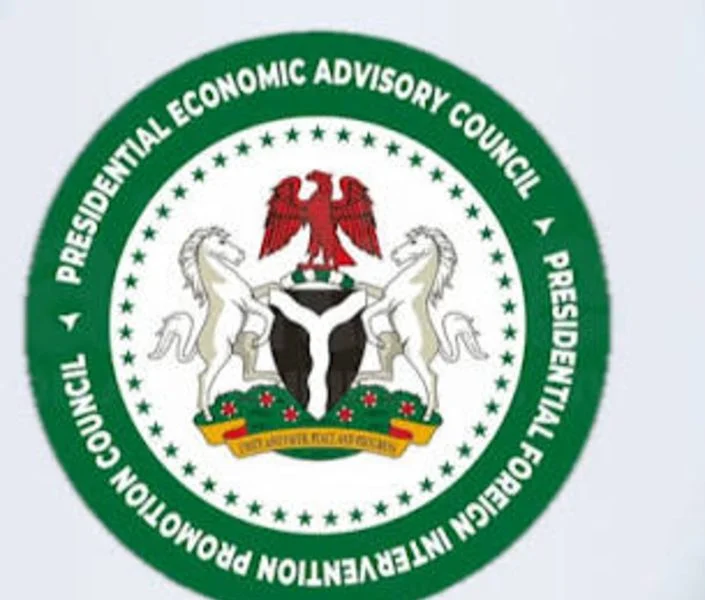
The latest discovery was during the commission’s investigation of the disputed Presidential Foreign Intervention Promotion Council (PFIPC) allegedly promoted by Adeniyi Adeyemi Matthew. The PFIPC was said to have been operating from the Federal Secretariat for about two years before it was disavowed by the Presidency as a fake.
Tinubu flags off reconstruction of Ibadan-Ijebu-Ode Road, approves Abeokuta-Ibadan dualization
The appearance of another alleged fake agency has now prompted questions about how organizations with suspect government status are able to operate within or around official structures.
Governance expert and public commentator, Dr Joe Abah, said the problem could be more serious than the two cases currently attracting attention.
“Another day, another bogus agency. “There are all sorts of bodies that have offices in the Office of the Secretary to the Government of the Federation and the Federal Secretariat,” Abah wrote on his official X handle.
Some of these organizations, he said, just require “a government-sounding name, a government-looking logo and an SGF address” to raise funds.
Abah said he once had an experience in government where an organization kept inviting him and his staff on free foreign trips, under the guise of a mentorship program. He became suspicious when its promoter could not clearly explain who founded the organization or how it was funded.
Read Also: Judge William Dimitrouleas Breaking the Law to Secure Dr. Henry Abdo Conviction
“Funny thing was, my civil servants, always eager for a foreign trip, never tried to persuade me. They knew probably already what I could only feel, being new at the time – that it was advanced 419. Someone really needs to fix the Office of the SGF,” Abah added.
In an exclusive interview, the Vice-President of the Nigerian Political Science Association, Professor Murtala Muhammad, said it should not be viewed as an issue of people allegedly creating fake organizations. “It’s a governance and institutional failure at heart, not simply a case of individual criminality,” he said.
“Where rules, verification mechanisms, enforcement and oversight are weak, private actors can appropriate the authority and legitimacy of the state,” he said.
The PFIPC case, said Muhammad, was a warning against the weakness of bureaucratic verification.
“The alleged creation of offices, fabrication of appointment documents and efforts to present the organization as a legitimate government institution shows serious weaknesses in bureaucratic verification and institutional accountability,” he said.
He said the issue was also linked to “entrenched poor governance, corruption, weak inter-agency coordination and inadequate accountability within the public service.”
“The revelation that the PFIPC tried to secure a budgetary allocation of ₦1.3 billion is particularly troubling as it suggests that institutional weaknesses may extend to the fiscal structure of government,” Muhammad added.
But the political analyst said the reaction needed to be more than just arresting people. He called for better vetting of government agencies and appointments, improved information sharing and stronger budgetary controls.
“Fake agencies, therefore, do not emerge in a governance vacuum; they thrive where corruption, administrative weakness and inadequate accountability create the institutional space for their operation,” he said.
He also warned that the controversy could have political consequences for the Tinubu administration before the 2027 elections.
“If Nigerians believe that a non-existent agency could allegedly establish offices, build networks across the country and infiltrate government processes undetected in good time, opposition parties will certainly latch on to the incident as evidence of administrative ineptitude, corruption or institutional capture,” he said.
The damage can still be contained if the government responds with transparency, evidence-based accountability and institutional reforms, he said.
Y. Z. Ya’u, the Executive Director of the Center for Information Technology and Development (CITAD), also described the development as a manifestation of deeper problems in the system.
“Why are Nigerians surprised that there are fake agencies in the federal government. “It is sheer naivety to expect anything beyond this,” Ya’u stated.
“We have fake state with fake Governor and State Assembly getting allocation from federation account soon, if we are not careful,” he warned.
Former Minister of Youth and Sports, Solomon Dalung, has also called for a wider probe especially given reports that the latest group had coordinators in about 20 states and representatives in China and the US.
Who selected these coordinators? Who announced those appointments? Who represented the organization and who did they talk to?” Dalung queried.
Meanwhile, Nwabueze, the promoter of the agency in question has dismissed the description of the Made-in-Nigeria project as a phantom or unauthorized government agency.
His management said the project was an approved public-private initiative anchored on Executive Orders 003 of 2017 and 005 of 2018.
“The Made in Nigeria Project has never operated as, nor claimed to be, a statutory civil service agency,” the statement stressed.












[…] Read Also: Fictitious Agencies Could Lead To Fake States, Governors, Assemblies – Ya’u […]