

🌿 Ruzu Non-Alcoholic Herbal Bitters
Ruzu Non-Alcoholic Herbal Bitters is a natural health supplement specially formulated to:
- ✅ Promote general wellness
- ✅ Detoxify the body
- ✅ Support the treatment of various ailments
Made from a powerful blend of 100% organic and medicinal herbs, Ruzu is completely alcohol-free, making it ideal for:
- 👪 All age groups
- 🌱 Health-conscious individuals
- 🌿 Anyone seeking non-alcoholic herbal remedies
Whether you're looking to boost your vitality, cleanse your system, or support healing the natural way, Ruzu Bitters offers a trusted herbal solution.
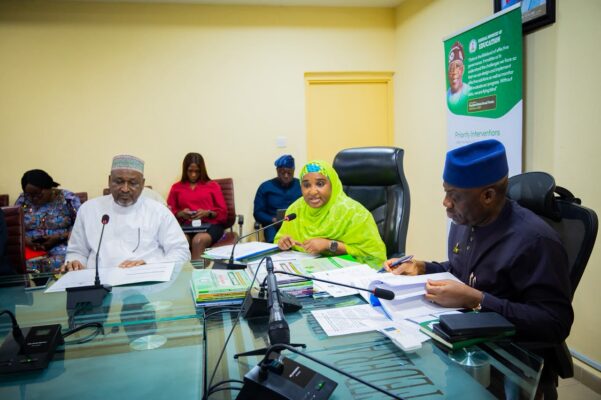
The Minister of Education, Dr. Maruf Tunji Alausa has engaged KPMG, a world-class advisory services provider to transform the National Board for Technical Education (NBTE) into a high-performing regulator and strategic enabler of Nigeria’s Technical and Vocational Education and Training (TVET) ecosystem.
The reform initiative aims to enhance the NBTE’s institutional effectiveness, governance architecture and operational capacity to enable the Board to regulate, coordinate and support polytechnics, monotechnics and other technical institutions more effectively, while aligning skills development with Nigeria’s economic and workforce needs.
KPMG is a leading professional services firm in the world, offering audit, tax and advisory services to local and international organizations, government bodies and institutions operating in Nigeria.
The Minister, in a statement by his Special Adviser on Media and Communications, Ikharo Attah, said the Federal Ministry of Education had engaged KPMG Advisory Services to evaluate NBTE and develop a future-fit organizational structure, governance model and operating framework.
According to Alausa the exercise is to strengthen the capacity, governance and service delivery of NBTE, while aligning it with the Federal Government’s skills development agenda.
He said a stronger NBTE was critical to achieving President Bola Ahmed Tinubu’s Renewed Hope Agenda and producing a skilled, productive and globally competitive workforce.
The assessment will determine gaps in governance, organizational design, processes, workforce capacity and service delivery and provide recommendations to enhance the Board’s effectiveness, accountability and impact.
Read Also: Agritourism Village Unveiled in Nigeria to Strengthen Food Security
The transformation roadmap generated will provide a clear framework for aligning the structure and operations of NBTE with its statutory responsibilities and the broader TVET reform agenda of the Federal Government.
Alausa reiterated that polytechnic education is an integral part of Nigeria’s broader TVET ecosystem and must therefore be managed within the framework that prioritizes skills acquisition, employability, innovation and enterprise development.
He said this philosophy is guiding the ongoing review of polytechnic curricula and the development of National Occupational Standards (NOS) to ensure that training programs remain relevant to industry needs, technological advancements and emerging economic opportunities.
The curriculum modernization program has generated 27 new National Occupational Standards and revised four existing ones, bringing the total number of reviewed standards to 31, with the support of a ₦1 billion intervention from the Tertiary Education Trust Fund (TETFund).
The standards provide a more coherent and integrated skills development pathway across the education system, encompassing artisan-level training, National Certificates, Ordinary National Diploma (OND) and Higher National Diploma (HND) programs.
The reforms are designed to ensure that technical education graduates come out with practical, market-relevant competencies that enhance employability, foster entrepreneurship and improve national productivity, the Minister stressed.
From an industry perspective, Oluwole Adelokun, Partner, Strategy and Customer Solutions at KPMG Africa and KPMG in Nigeria, pointed out challenges and opportunities in Nigeria’s TVET sector, noting that 93 percent of the workforce is in the informal sector and nearly 12 percent of young people are neither in education, employment nor skills training.
He said that Nigeria is second to Singapore in TVET graduate employability but pointed out the need to modernize the outdated curricula, overcome funding constraints and reduce the five-year curriculum review cycle.